
Saturday, March 6, 2010

Inspiration: Cute Owls

Photobucket

Photobucket

Photobucket

Photobucket

Inspiration: Random Images I want to turn into jewelry

Photobucket

Photobucket

Photobucket

Photobucket

Photobucket

Photobucket

Photobucket


...I have a million more, just need to find them.....

Inspiration: Nautical Nonsense

... I already have a butt-ton of these anchor charms, but I'm not sure what to do with them yet... Here are some inspiration from other cute jewelry:


Okay, unrelated, I've been eying these shoes for quite awhile....


Drooooooool.....

Idea: Cute Monsters


Since Plushies are so over-done, and easy to make, therefor not a best seller, I think cute monster charms are a much better idea....

Idea


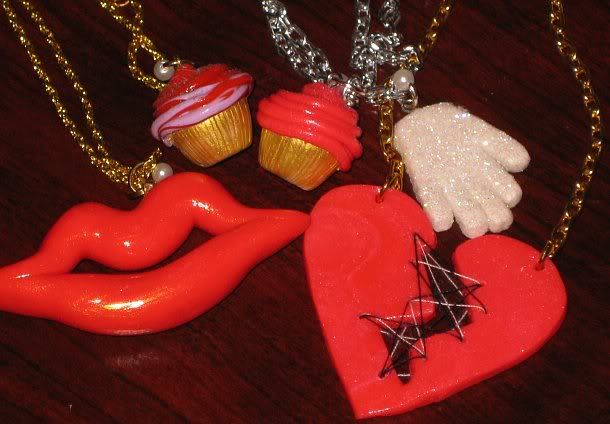
I love the Broken Heart Necklace Idea. I actually did a huge art piece that was similar... I don't have a picture of it, it's in storage somewhere, but it's quite a bit more morbid than that, the idea of a broken heart that's beat up, and sewn back together is really rad if you ask me.


These are pretty lame examples, but you get the idea.

Idea

Photobucket

Katamari necklace charms....

Friday, March 5, 2010

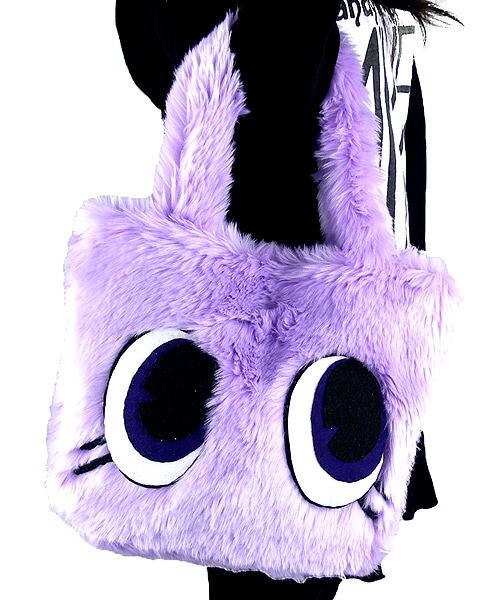
Inspiration: Bags

Photobucket


Totoro!


Visual Kei

Visual kei (ヴィジュアル系 vijuaru kei?, lit. "visual style") refers to a movement among Japanese musicians, that is characterized by the use of make-up, elaborate hair styles and flamboyant costumes, often, but not always, coupled with androgynous aesthetics. Some sources state that Visual Kei refers to a music genre, or to a sub-genre of J-rock (a term referring to Japanese rock in general), with its own particular sound, related to glam-rock, punkmetal. However other sources state that Visual Kei's unique clothing, make-up, fashions, and participation in the related sub-culture is equally as important as the sound of the music itself in the use of the term.


and

Visual Kei emerged in the late 1980's (however, evidence of presence in even the early 70's should be noted,) pioneered by bands such as Boøwy, X Japan, D'erlanger, Buck-Tick, and Color.

The term Visual Kei was created with "PSYCHEDELIC VIOLENCE CRIME OF VISUAL SHOCK" that was a slogan of X Japan.

Color vocalist "Dynamite Tommy" formed his record company Free-Will in 1986, which has been a major contributor in spreading modern Visual Kei outside Japan.

In 1992, X Japan launched an attempt to enter the European and American markets, but it would take another 8 years until popularity and awareness of Visual Kei bands would extend worldwide.

In the mid 1990s, Visual Kei received an increase in popularity throughout Japan, and album sales from Visual Kei bands started to reach record numbers. The most notable bands to achieve success during this period included, X Japan, Glay, and Luna Sea, however a drastic change in their appearance accompanied their success.

During the same period, bands such as Kuroyume, Malice Mizer, and Penicillin, gained mainstream awareness, although they were not as commercially successful.

By 1999, mainstream popularity in Visual Kei was declining, X Japan had disbanded, and the death of lead guitarist Hideto Matsumoto in 1998 had denied fans a possible reunion. It was not long before Luna Sea decided to disband in the year 2000.

In 2007 the genre has been revitalized, as Luna Sea performed a one-off performance, and X Japan reunited for a new single and a world tour. With these developments, Visual Kei bands enjoyed a boost in public awareness, described by the media as "Neo-Visual Kei".

What is Gyaru?


(This is taken from an eHow.com Article "How to be Gyaru, ha ha, silly, but informative!)


  1. There are a variety of different sub styles to the gyaru scene. First you should acquaint yourself with them and chose which is most suited to your personality.

    YAMANBA- This was the first incarnation. To achieve this look you must tan deep and apply white makeup. The hair should be blond or silver. The fashion is 90's style
    MANBA- The newer form of Yamanba. Tans are a little less dark, and makeup is applied more artfully. This is where the commonly known "panda-face" make comes into play. The clothing here is also very brightly colored.
    ROMANBA- Manba but with a "ro"mantic twist. Lots of pink and lace is used in this style. The Disney character Marie is very popular, as is Hello Kitty. Your style icon here is Ka~tan. This look has nothing to do with lolita.
    KOGAL- This term refers to Gals who are still in high school. The key feature in this look is the schoolgirl uniform.
    BGYARU- These Gals emulate the western hiphop and R&B scene. Dark tans and cornrows are common.
    AMEKAJI- "American casual" style. Gals wear what is commonly scene in America, but with a little more effort. A very popular brand is Cocolulu. Mickey Mouse is very popular.
    ONEEGYARU- Mature style. A look for those who are in their early to late 20's. It is more grown-up and sexy looking, dark colors are common. Lots of bling.
    HIMEGYARU- Over the top princess style. The hair is huge and bouffant like, spiraling down to curls. Lots of pink, bows, roses, and lace. Jesus Diamante is the cult brand, La Parfait is worn as well.
    HIMEKAJI- Casual princess look. Still lots of pink and bows, but much more manageable. Popular brands are Liz Lisa, and Tralala.
    RASUTA- Rastafarian look. Think Bob Marly plus Bgyaru style. Lots of green, yellow, and red.
    PSYCHEGAL- Bohemain hippie look. Long flowing dresses, long flowing hair, mostly browns.
    ROKKU- Rock and biker style. Lots of dark color and hard elements like spikes and leather jackets, yet still feminine. Faux-hawks, plaid, and Vivienne Westwood are very popular.
    HAADYGAL- A term coined by EGG magazine. Gals who follow Ed Hardy designs, also goes along with the brand JSG.
    AGEJO- Hostess style. Mature gown style with himegyaru-esque hair, the tan is lighter. These girls work at "host clubs" and are very glamorous.
    ONIIGYARU- Older brother style. Tomboy look but still with girly elements such as the makeup, hair, and sometimes heels. Kanako is your girl
    platforms, tube tops, neon colors, and Hawaiian motifs. This scene is dead.

  2. Step 2

    The most important thing really is to be tan. Manbas are the darkest tan, and Agejos have the lightest tan.
    It's true that tanning isn't as extreme as it used to be, but it's still the most decided factor in Gyaru style, so please don't skip out on it.
    There are a couple different ways to achieve a tan. You can

    A.) Tan in the sun
    B.) Tan in a salon bed. Some people say this is safer than in the sun, this is not true. ALL UV rays are harmful.
    C.) Get a spray on tan in a salon. No harmful UV rays! If you breath in the mist it can be dangerous. This usually costs ~$20.
    D.) Self-tanners. Can be either lotion or spray, I prefer spray. I recommend Hempz brand for sprays and ST. Tropez fake bake xtreme for lotions.
    E.) Gradual tanners. These are lotions that gradually tan you over a week, I find them to be streaky. Jergens brand is best.

  3. Step 3

    Hair is bleached, blond is the most common, older styles were silver or neon colors. The popular style today is a light copper orange.
    The styling of that hair ranges from look to look, however it is usually big and consisting of curls.
    This site has some cute straight hair styles http://s641.photobucket.com/albums/uu133/gyaru_hair/

  4. Step 4

    Gals always have well manicured nails, often very over-the-top. They usually consist of many rhinestones, pearls, deco-den, and acrylic accents.
    Here is a nice site to buy some glue-on ones http://fullmoon07xxx.ocnk.net/

  5. Step 5

    Circle lenses really help "push" the gal envelope. They make your eyes look larger and more watery. Many styles and brands exist, the most popular being Nudys and GEOs.
    They are around 14 mm in diameter, about the size of normal colored contacts. The difference with these being that the color extends all the way to the edges.
    You can buy some here http://japanesecandy06.livejournal.com/

  6. Step 6

    There are several makeup tutorials you can find with a quick google search. I will give you a basic guide here.

    1.) Shape you eyebrows into a nice arch and trim them short
    2.) Insert circle lenses. If you have single-lids, tape them up.
    3.) Apply a foundation That matches your tanned skin.
    4.) Apply eyeshadow, colors are usually neutral. Try to go for a smokey eye.
    4.) Apply a liberal amount of black liquid eyeliner.
    5.) Put long false lashes on the top lid, and shorter ones on the bottoms lid.
    6.) Use a dark brown powder or a bronzer to shade the side bridges of your nose. You can also use a white powder to highlight your center nose bridge and the apples of your cheeks.
    7.) Use bronzer or blush on your cheekbones.
    8.) Use nude lipstick on your lips.

    Popular makeup brands are MAC and Chanel. Gals can be brand whores sometimes.

  7. Step 7

    Life the Gyaru lifestyle Go shopping for trendy clothes that suit your style. Bling and deco-den everything you have! Always carry your makeup. Join a Gal-cir and learn a ParaPara routine. Read the magazines EGG and Popteen. Go out and go clubbing!


Gothic Lolita


Since its origin around the late 90s, the Gothic Lolita scene has continually aroused curiosity and fascination in popular culture. As shown in many guidebooks to Tokyo, Sundays on Harajuku Bridge is a ritual of sorts for the Gothic Lolita (GothLoli for short)—they hang out to be seen, do their make-up, talk to friends, and get photographed. Any Sunday visit to the famous Harajuku “bridge” (it’s not an actual bridge) will show you more tourists snapping shots than actual GothLoli. The scene, along with other youth fashion movements, has died down some since the Tokyo Government decided to re-open the main road, Omotesando, for traffic in 1998, however, there are handfuls of die-hard GothLoli that continue to show up every Sunday.

So what exactly is Gothic Lolita? Some speculate that it is the social backlash to the Japanese appropriation of the sunny California beach Barbie look, known as “gyaru”, from neighboring youth shopping district Shibuya. Most GothLolis cite that they are merely imitating their favorite bands from the visual rock genre, known as "Visual Kei". Although it seems an obvious reference to Vladimir Nabokov’s scandalous Lolita, many Gothlolis will tell you that books (other than manga, Japanese comics, which are also at the heart of the scene) and art are not a part of their inspiration. Music is a major force in its creation. Visual Kei is exactly as it sounds: Rock music that incorporates visual effects and elaborate costumes to heighten the experience of the music and the show. Visual Kei started in the 80s and became so popular by the 90s that the nearly all-female fan base started dressing up as their favorite band members (known as “cosplay”) who were often males that wore make-up, crazy hair, and dressed androgynously or as females (usually, the more feminine the rocker, the more fans rush to emulate them). The Gothic Lolita scene was born.

GothLolis characterize their look by combining black and white (or pastels and white for the “sweet” GothLoli look) mini- or knee-length dresses with accents of crinoline and lace, corseting details and emblazoned with ribbons. Accessories are also an important part of the look: tiny top hats worn askew with a satin ribbon tied under the chin, bonnets or headbands, dolls or teddy bears, parasols, ruffled knee-high or thigh-high socks, opaque stockings or fishnets, white frilly aprons, and chokers with charms like cameos, spiders, coffins, cherries, or skulls. Their handbags can range from patterned rolling suitcases to hatboxes to Kelly bag styles. Most GothLolis love the high-end Vivienne Westwood (her infamous “Rocking Horse” wooden platform Mary Janes and boots are highly coveted) and Jean Paul Gaultier labels as well as the multitude of Japanese labels that have sprung up in answer to the demands of the scene’s popularity.

For the GothLoli face, the starting point is always porcelain skin (not only goth but also considered beautiful in Japan) usually achieved with make-up but oftentimes just bare skin, black eyeliner or no eyeliner at all, colored contacts, long bangs or Shirley Temple curls, fresh pink cheeks and bare or natural colored lips. There is a distinction: if the make-up is darker and the hemlines flow longer as being Gothic and not Gothic Lolita. Although the title “Lolita” certainly conjures up images of sexuality, the look seems mostly devoid of it and focused more on a puerile “cuteness”—a seemingly overused term and aesthetic in Japanese culture.

As all movements will, the popularity surrounding the Gothic Lolita scene in Japan has moved it into the realm of accepted mainstream popular culture, and is also becoming more popular among males (also referred to as GothLoli), who are now seen among the throng of girls in Harajuku. In the past, their costumes would be (and in some cases still are) hand-made, but now there are a multitude of stores within walking distance from the Harajuku Bridge that make it possible for anybody to purchase the entire look—although it is most certainly not cheap. In Shinjuku, a bustling business district in Tokyo, a major department store chain, Marui, houses only Gothic Lolita boutiques on its top floors; they let you fully experience their world with creepy facades, props and spooky lighting. Enthusiasts and GothLoli can also navigate the world of the GothLoli through the 100-plus pages of the infamous Gothic & Lolita Bible (available on www.amazon.com or www.jbox.com), now in its 18th issue.

Gothic Lolitas offer Japan the darker side of "cute", but don't necessarily offer much social commentary as to its phenomenon. Themes that do crop up are escapism from feeling isolated and anonymous in an over-crowded, cold city and a borderline creepy obsession with youth. Many Japanese youths are trying to escape entering the permanent, corporate hell of the “salarymen” (suit-wearing businessmen) of their parents’ generation. They attempt to forge individual paths of their own, completely reject society, or reject full-time work and go from one part-time job to another to retain some freedom in their lives.

Famed Japanese artist Takashi Murakami (who recently exhibited “Little Boy: The Art of Japan’s Exploding Subculture” and famously collaborated with Marc Jacobs for Louis Vuitton) links this obsession with “cute” to the loss of World War II: the upheaval of the country and the “infantilizing” effects of American occupation are expressed through cute, but passive, art and music as forms of escapism from the reality of post World War II Japan. You can ask many GothLolis why the dress-up and they will often respond matter-of-factly, “Because it’s cute.”